There isn't a single recipe for writing a screenplay that resonates. Ask 10 successful screenwriters how they work, and you'll likely hear 10 different answers. Some outline meticulously. Others discover the story as they write. Some begin with a character, others with a single image or question they can't shake.
Yet after speaking with two recent Cinequest Screenwriting Competition finalists, one thing became clear: while every writer's path is different, the habits that sustain great storytelling often look surprisingly similar.
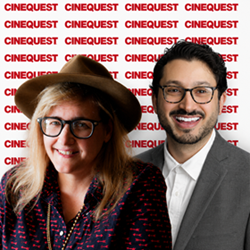
At first glance, Michele Noble and Benny Davis couldn't seem more different. Noble is a veteran television writer, director, and producer whose career spans decades of acclaimed work across film and television. Her television screenplays JUIF and Happiness 2.0 were both named Top 3 Finalists (in different categories) at the 2026 Cinequest Screenwriting Competition, an uncommon distinction that speaks to the breadth of her work. Davis is a filmmaker and editor whose finalist screenplay, Disco Cop, blends surreal comedy with heartfelt emotional stakes in a way that's entirely his own. His work reflects a deep belief that humor and tragedy are not at odds, but partners in great storytelling. One brings years of industry experience; the other represents a newer generation of storytellers forging an unconventional path.
What unites them isn't genre, career stage, or even process. It's a shared curiosity about people, a willingness to embrace revision, and a commitment to writing stories they genuinely believe in rather than stories they think the market wants.
Their advice isn't a checklist for guaranteed success because no such checklist exists. Instead, it's a collection of habits, perspectives, and creative philosophies that have helped each of them develop distinctive voices and create work worthy of recognition. Whether you're staring at a blank page or polishing your latest draft, their experiences offer a reminder that great screenwriting isn't about following a formula. It's about finding the practices that allow your own voice to emerge.
Inspiration: Pay Attention to What Fascinates You
Every screenplay begins with an idea, but where those ideas come from is often less mysterious than writers imagine. For both Noble and Davis, inspiration isn't something that strikes out of nowhere. It's something they've spent a lifetime noticing, collecting, and nurturing.
For Noble, storytelling started long before she knew what screenplay structure or character arcs were. As a child, she delighted in writing elaborate murder mysteries and assigning each member of her family a role to play. Her father presided as the judge, her mother argued the case as prosecutor, her grandmother defended the accused, and her sister was almost always the guilty defendant. Looking back, it's easy to see the beginnings of a screenwriter: not someone chasing the next big idea, but someone endlessly fascinated by people and the stories they might tell.
That curiosity has never left her. While many travelers pass the time scrolling through their phones, Noble entertains herself in airports by inventing lives for strangers while waiting at the gate. A snippet of overheard conversation, a nervous glance toward the departures board, an unusual outfit; small observations become the seeds of entirely imagined worlds. She even keeps a notebook beside her bed because dreams have a habit of solving story problems she couldn't crack while awake. Admittedly, not every midnight revelation is useful. Some entries are little more than surreal reminders like "Jello dog like a tree." But every now and then, a dream contains exactly the missing piece a screenplay needed.
Davis's path to storytelling was different, but it sprang from the same impulse to create. At 11 years old, after discovering a series of stop-motion clay animations online, he borrowed his father's camcorder, found some clay, and started making his own films. It wasn't a calculated decision to become a filmmaker. It simply felt like the next step for a kid who already spent hours inventing stories with his toys. Writing, directing, animating. These weren't separate pursuits so much as different ways of bringing his imagination into the world.
As he grew older, Davis continued feeding that imagination by studying the storytellers who moved him most. Mel Brooks' fearless comedy, William Goldman's wit, Peter Jackson's epic worldbuilding, Alfred Hitchcock's precision, and even the creativity of early internet animators like Jason Steele and The Brothers Chaps each left their mark. But rather than simply imitating the directors he admired, he became interested in tracing their influences even further back. His advice to aspiring writers is refreshingly practical: don't just watch your favorite filmmakers. Watch the films that inspired them. Every generation of storytellers is in conversation with the ones that came before. The more you understand where ideas come from, the more confidently you can find your own voice.
Neither finalist ever described trying to predict what Hollywood wanted or chasing whatever genre happened to be selling. Noble writes because a particular story refuses to leave her alone. Davis follows the ideas that genuinely excite him, even when they begin with something as delightfully odd as a disco-loving cop. Their careers are different, their voices unmistakably their own, but they share a quiet confidence that originality doesn't come from trying to be different. It comes from paying close attention to what genuinely fascinates you and trusting that those interests are worth exploring.
Craft: Finish the Story You’re Trying to Tell
Inspiration may spark a screenplay, but craft is what carries it to the finish line. Both Noble and Davis spoke passionately about process, and neither offered shortcuts or secret formulas. Instead, they described writing as a practice built on consistency, curiosity, and the willingness to let imperfect work exist before trying to perfect it.
For Noble, that process begins long before she writes "FADE IN." She outlines extensively using index cards, arranging scenes until she understands the shape of the story. Once she begins drafting, however, she commits to moving forward. Each morning, she reads what she wrote the day before over a cup of coffee, makes notes if something isn't working, and keeps writing. Only after reaching the end does she return for serious revisions.
It is a philosophy she believes many writers struggle to embrace.
Too often, she says, writers spend weeks polishing the first 10 pages while pages 11 through 60 have yet to be written. A screenplay cannot improve if it doesn't exist. Her goal is simply to get the story onto the page, even if that first draft is, in her words, a "vomit draft." Refinement comes later.
One of her favorite techniques is remarkably simple. When she finds herself stuck in a scene, rather than forcing the moment to work, she writes a single line: "Laura exits." Whoever the character may be, she lets them leave the room and follows them somewhere else. More often than not, the story begins moving again. By stepping away from the problem instead of wrestling with it, she discovers that the answer was waiting elsewhere all along.
That philosophy extends to revision as well. One of the most valuable lessons she ever received from a mentor was this: the answers are already in your script. If something feels wrong, resist the urge to invent entirely new solutions. Instead, return to what you've already written. Your characters have already revealed who they are. Your story has already planted clues about where it wants to go. Revision becomes less about forcing ideas onto the page and more about paying closer attention to what is already there.
Davis approaches craft from a different direction, but he arrives at many of the same conclusions. His advice begins with reading. Constantly.
As a teenager, he devoured produced and unproduced screenplays, downloading Black List scripts years before many became feature films. Today, he still encourages aspiring writers to seek out scripts through resources like Script Slug and other online libraries. Reading great screenplays, he believes, trains your instincts in ways no craft book can.
Film school reinforced those lessons by stripping storytelling down to its essentials. In one assignment, students had just 30 seconds to introduce a character. There was no dialogue, no sound, and no cinematic spectacle to lean on. Every visual choice had to communicate something meaningful. The exercise forced students to ask a deceptively simple question: How much can an audience understand about a character before they ever speak?
That focus on economy stayed with him. Every scene, every action, every image should earn its place. But Davis is equally adamant that writers should never be afraid of bad ideas. Some of his own pitches, he laughs, have been "straight garbage." But it's part of the process. Experimentation means giving yourself permission to explore ideas that don't work, because every discarded concept sharpens the ones that do. And when an idea you truly believe in is dismissed, he doesn't see that as proof it's a bad story. More often, it's a sign that the story hasn't yet found the right way to communicate with its audience.
For both writers, craft is less about mastering a rigid set of rules than about developing habits that allow stories to grow. Finish the draft. Read constantly. Experiment often. Trust revision. Most importantly, keep writing.
Originality: Write the Story Only You Can Tell
If there is one piece of advice aspiring screenwriters hear more than any other, it is to "be original"–but they’re rarely told how to achieve it.
Noble offers a different perspective. She doesn't begin by asking what audiences haven’t seen before. Once she commits to a project, her responsibility shifts entirely to the story itself. Every creative decision serves the needs of the characters, the world, and the emotional truth of the screenplay. In that sense, originality is not something she chases. It is the natural result of listening carefully to the story she is trying to tell.
Davis's finalist screenplay, Disco Cop, demonstrates that philosophy beautifully. On its surface, it is an outrageous premise involving disco, comedy, and a hero who feels delightfully larger than life. Beneath the humor, however, is a story about grief, failure, redemption, and learning to believe in yourself again after you've fallen short of the person you hoped to be.
For Davis, those emotional foundations are precisely what make the comedy work. "If we can laugh with a character," he says, "we can cry with them."
It is a simple observation that speaks to something much larger about storytelling. Humor does not distract from emotion. It creates the trust that allows audiences to embrace it. Once viewers have laughed with a character, they become invested enough to follow them through heartbreak, loss, and transformation.
Both Cinequest finalists arrived at originality through authenticity rather than novelty. Noble trusts the internal logic of the story. Davis embraces ideas that genuinely excite him, no matter how unconventional they may seem. Neither writer sets out to be different for the sake of being different. Instead, they remain faithful to their own creative instincts, confident that honest storytelling will always stand apart from imitation.
That may be the most encouraging lesson of all. Winning screenplays are not built by following trends or chasing the market. They are built by writers who pay attention to what fascinates them, commit themselves to the craft, and tell stories that no one else could tell in quite the same way.
Every Screenplay Starts With a Writer
After speaking with Noble and Davis, it becomes clear that there is no single path to writing a screenplay that stands out. One writer builds stories through careful observation, the other through relentless experimentation. Yet both arrive at their destination through curiosity, discipline, and an unwavering commitment to telling stories that matter to them.
That commitment is also what drew Noble to the Cinequest Screenwriting Competition. When asked why she chose to submit, her answer had little to do with prizes or industry attention. Instead, she pointed to the competition's reputation for heavily emphasizing writers: “The writing was something that [Cinequest] really appreciated. Now, you would think every film festival that does writing competition would be about the writing. But that's not the case.” For a writer who believes every creative decision should serve the story rather than the marketplace, that philosophy mattered. It also reflects what both finalists experienced: a competition that recognizes distinctive voices instead of rewarding formula.
Neither writer believes a screenplay must be perfect before it's worth sharing. Noble encourages writers to finish the draft before obsessing over every page, trusting that revision can only begin once the story exists. Davis urges writers to keep reading, keep making things, and keep exercising the creative muscles that grow stronger with use. Together, their advice offers an encouraging reminder that the writers we admire did not arrive fully formed. They became better by writing the next page, finishing the next draft, and remaining curious enough to begin again.
---
If you'd like to learn more about these remarkable writers, you can explore Michele Noble's work at www.michelenoble.com and Benny Davis's at https://www.instagram.com/bennydavisphoto/.
And if you've been waiting for the right moment to share your own story, consider taking that next step. The Cinequest Screenwriting Competition welcomes writers at every stage of their journey who are ready to put their work into the world. Learn more or submit your screenplay at www.FilmFreeway.com/CinequestScreenwritingCompetition.
About the Author
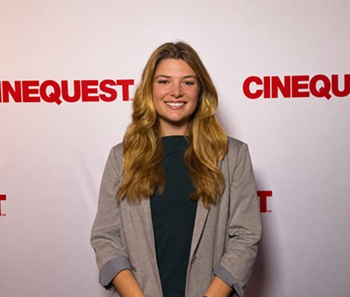
Rebecca Rodriguez-Soto is the Special Projects Manager at Cinequest, where she leads initiatives spanning the Cinequest Film & Creativity Festival, the Cinequest Screenwriting Competition, and year-round programs that champion emerging storytellers. She works closely with filmmakers, writers, industry professionals, and partners to expand opportunities for creators and foster a vibrant storytelling community.